

CASE STUDY
MORE THAN A CORPORATE FILM
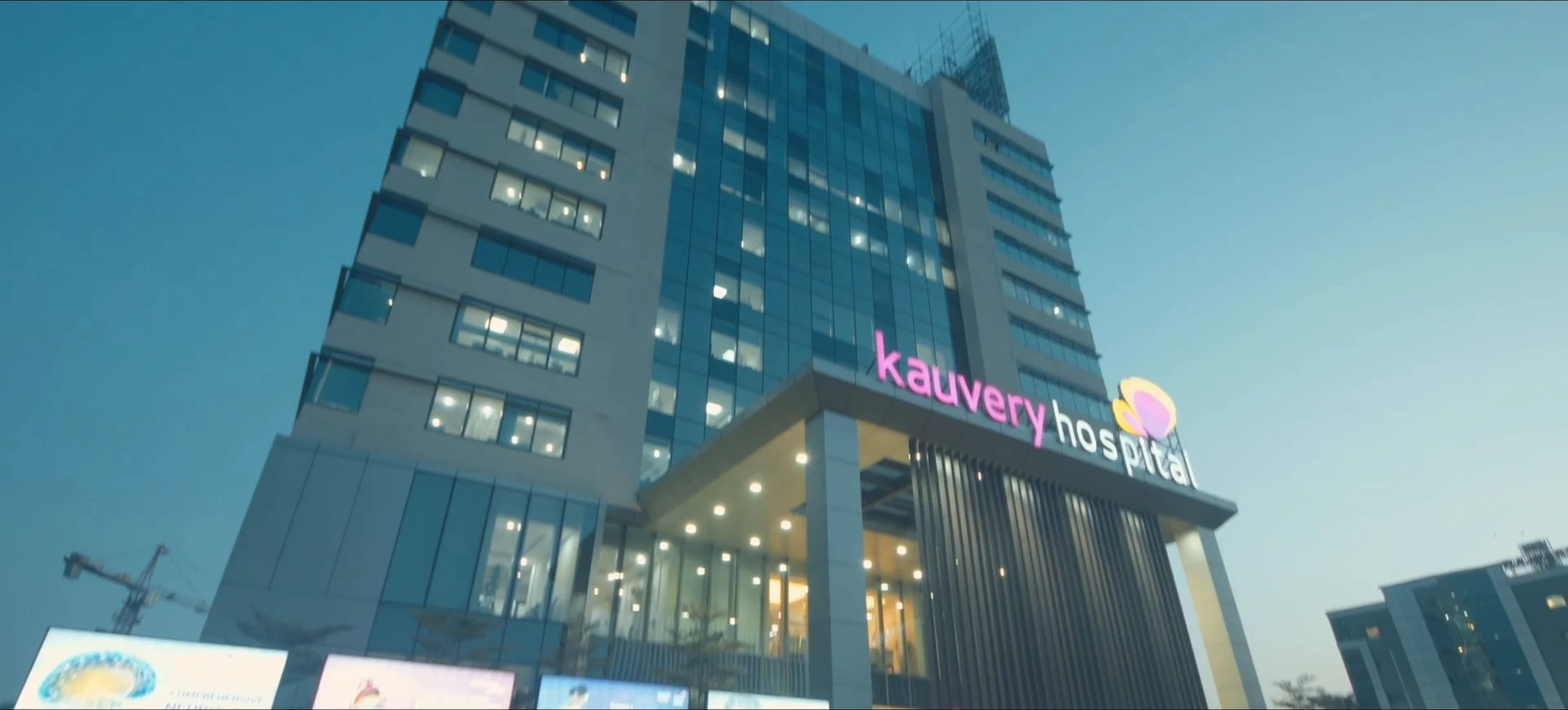
Every finished film hides a much larger story behind it. For our team, the Kauvery Hospital Corporate Film was one of those projects.
What appears on screen as a seamless journey through doctors, departments, advanced medical facilities and patient care was built through a far more demanding process: research, personal conversations with doctors, multiple shoot schedules, reshoots, long hours in the edit room and repeated rounds of refinement.
It became one of the most ambitious corporate film projects our team had taken on. More importantly, it taught us that telling the story of a hospital requires much more than filming beautiful spaces. We first had to understand the people, the specialities and the healthcare ecosystem behind them.
Understanding the people before filming them
The scale of the brief was immediately clear. Kauvery Hospital brings together multiple medical specialities, departments, doctors, advanced technology and different stages of patient care. The film had to bring those elements together without turning into a catalogue of facilities.
So our preparation went beyond shot lists and camera plans. Our team personally met the doctors who would appear in the film and spoke with them about their specialities, their departments and the work they do. Those conversations gave us context that no generic brief could provide.
We wanted to know who we were filming before deciding how to present them. That understanding helped us plan the visuals more meaningfully and later became one of our strongest advantages in the edit room. The footage was no longer just a collection of faces and hospital spaces; each sequence came with a clear understanding of the person, speciality and purpose behind it.
Capturing an entire hospital story
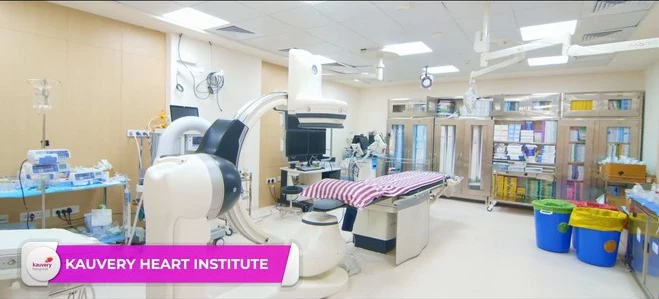
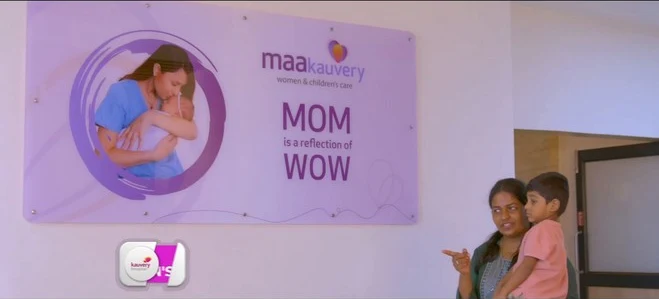
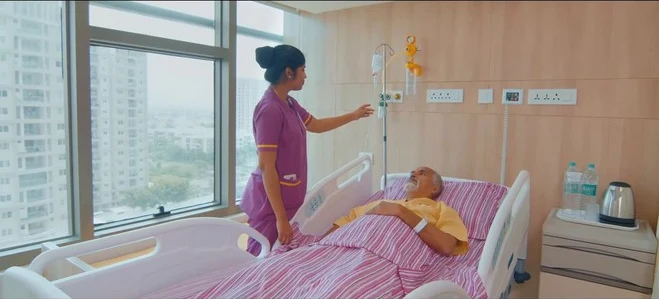
The production itself demanded constant coordination. The objective was broad: represent doctors across departments while also showing infrastructure, medical technology, patient environments and the overall experience of the hospital.
Healthcare production has its own realities. A doctor's first responsibility is always the patient. Consultations can run longer than expected. Clinical spaces can suddenly become unavailable. A planned sequence can shift within minutes because real healthcare cannot pause for a camera.
That meant our team had to stay flexible throughout the shoot. We adjusted schedules, moved between departments and worked around changing availability while ensuring that production never interfered with hospital operations. The challenge was not simply to get the shot; it was to get the right shot responsibly.
If a scene could be better, we did not want to keep it simply because it had already been shot.
Why reshoots mattered
Not every sequence reached the standard we wanted on the first attempt. Some visuals needed stronger composition. Some needed better continuity. Others simply did not communicate the story with enough clarity.
That led to reshoots — one of the most demanding parts of the project. Returning to a hospital location meant coordinating people and spaces again, matching conditions from the earlier shoot and making sure new footage would sit naturally beside material that was already captured.
Reshooting was not the easiest option, but it was the right one. We treated it as part of the creative process rather than as a setback. The final film mattered more than the convenience of accepting a shot that we knew could be improved.
The real puzzle was in the edit
Once production was complete, the project entered another difficult stage. We had a large volume of footage covering doctors, specialities, departments, procedures, technology, interiors and patient care. The challenge was no longer gathering enough material; it was deciding what every second of the film needed to do.
Each doctor and department had to be represented accurately. Visuals needed to support the information being communicated. The pace had to feel confident and engaging without rushing important moments. Voice-over, music, graphics, transitions and colour all had to work together without making the film feel overloaded.
There were sections we rebuilt more than once. Shots were replaced. Timings changed. Sequences were reordered. A correction in one part of the timeline could affect the music, voice-over and surrounding visuals. The final few minutes were shaped by hundreds of small decisions that the audience would never see.
This was also where the time spent with the doctors proved especially valuable. Because we had already spoken with them and understood their specialities, our editors had real context while building the story. That reduced guesswork and helped us preserve accuracy while still creating a film with rhythm and emotion.
Getting the film across the finish line
The final stage brought a different kind of pressure. After weeks of production and post-production, the film still had to move through reviews, corrections, quality checks and delivery.
At this stage, even a small change could ripple through the edit. A revised doctor sequence could change timing. A new visual might need colour matching. A shortened section could affect the voice-over or music. Every adjustment had to be checked not only on its own, but also for what it changed around it.
Our goal was not simply to finish the film. We wanted to deliver something that represented Kauvery Hospital with care and represented the standard of work we wanted our own team to be known for.
What the finished film does not show
The audience sees the completed frames. They do not see the conversations with doctors before the camera rolled. They do not see schedules changing in real time, the shots that were rejected, the sequences we returned to film again or the different versions that existed before the final edit.
And perhaps that is the point. When the complexity behind a production disappears into a film that feels clear and effortless, the work has done its job.
For our team, the Kauvery Hospital Corporate Film became more than another portfolio piece. It tested our research, coordination, production, editing and problem-solving at a much larger scale. It also reinforced something we believe strongly: the quality of a corporate film is shaped long before the final export.
Our takeaway
The final film may last only a few minutes. The journey behind those minutes is a story we are equally proud of.